Autors:
Vērtējums:
Publicēts: 17.07.2025.
Valoda: Angļu
Līmenis: Vidusskolas
Literatūras saraksts: 4 vienības
Atsauces: Nav
  • Prezentācija 'British Empire - the world's foremost economic power', 1.
  • Prezentācija 'British Empire - the world's foremost economic power', 2.
  • Prezentācija 'British Empire - the world's foremost economic power', 3.
  • Prezentācija 'British Empire - the world's foremost economic power', 4.
  • Prezentācija 'British Empire - the world's foremost economic power', 5.
  • Prezentācija 'British Empire - the world's foremost economic power', 6.
  • Prezentācija 'British Empire - the world's foremost economic power', 7.
  • Prezentācija 'British Empire - the world's foremost economic power', 8.
  • Prezentācija 'British Empire - the world's foremost economic power', 9.
  • Prezentācija 'British Empire - the world's foremost economic power', 10.
  • Prezentācija 'British Empire - the world's foremost economic power', 11.
Darba fragmentsAizvērt

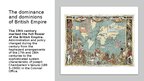
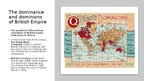
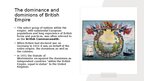
The dominance and dominions of British Empire
The 19th century marked the full flower of the British Empire. Administration and policy changed during the century from the haphazard arrangements of the 17th and 18th centuries to the sophisticated system characteristic of Joseph Chamberlain’s tenure (1895–1900) in the Colonial Office.
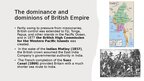
Partly owing to pressure from missionaries, British control was extended to Fiji, Tonga, Papua, and other islands in the Pacific Ocean, and in 1877 the British High Commission for the Western Pacific Islands was created.
 In the wake of the Indian Mutiny (1857), the British crown assumed the East India Company’s governmental authority in India. 
 The French completion of the Suez Canal (1869) provided Britain with a much shorter sea route to India. 

Atlants