Challenge in higher eduacation
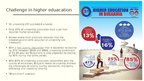
51 university (37 public&14 private)
Only 25% of university graduates start a job that requires higher education;
Almost every third graduate declares that the knowledge and skills acquired at university are irrelevant;
With a fast ageing population that is expected to decline by 27% between 2010 and 2060, university enrollment of 15-24 year old Bulgarians is also projected to decline by 41% during the same period.
With 85% of university graduates dissatisfied with the quality of education, Bulgaria needs to urgently address the challenges of raising quality standards, improving efficiency and investing smartly
“Brain-drain” problem
What can be done?
an attempt to address these challenges, the Bulgarian Ministry of Education and Science has presented a draft Strategy for developing the higher-education sector over the next 7 years (2014-2020)
quality of education and the link with labor market are the main areas that need attention
Doesn’t this all sound familiar with situation in Latvia?
…