Vērtējums:
Publicēts: 23.02.2026.
Valoda: Angļu
Līmenis: Augstskolas
Literatūras saraksts: 9 vienības
Atsauces: Ir
Laikposms: 2021. - 2025. g.
  • Referāts 'Nanowires', 1.
  • Referāts 'Nanowires', 2.
  • Referāts 'Nanowires', 3.
  • Referāts 'Nanowires', 4.
  • Referāts 'Nanowires', 5.
  • Referāts 'Nanowires', 6.
  • Referāts 'Nanowires', 7.
  • Referāts 'Nanowires', 8.
  • Referāts 'Nanowires', 9.
  • Referāts 'Nanowires', 10.
  • Referāts 'Nanowires', 11.
  • Referāts 'Nanowires', 12.
  • Referāts 'Nanowires', 13.
  • Referāts 'Nanowires', 14.
  • Referāts 'Nanowires', 15.
  • Referāts 'Nanowires', 16.
  • Referāts 'Nanowires', 17.
  • Referāts 'Nanowires', 18.
  • Referāts 'Nanowires', 19.
  • Referāts 'Nanowires', 20.
  • Referāts 'Nanowires', 21.
  • Referāts 'Nanowires', 22.
SatursAizvērt
Nr. Sadaļas nosaukums  Lpp.
  INTRODUCTION    4
1.  NANOMATERIALS CLASSIFICATION    5
2.  STRUCTURE OF NANOWIRES    6
3.  METHODS OF OBTAINING NANOWIRES    8
4.  PROPERTIES OF NANOWIRES    11
5.  MEDICAL APPLICATIONS OF NANOWIRES    14
  CONCLUSIONS    19
  USED LITERATURE    20
Darba fragmentsAizvērt

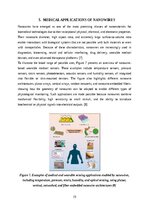
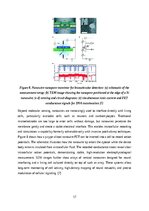
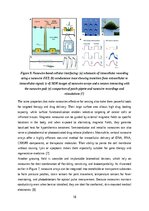
This work presents a comprehensive study of nanowires as a distinct class of nanomaterials, emphasizing their structural characteristics, fabrication techniques, and the unique physical properties that enable their integration into modern medical technologies. The research addresses the growing need to understand how nanoscale geometry influences material behavior and how these effects can be utilized in biomedical engineering. The aim of the report is to examine nanowire structure, synthesis methods, and functional properties, as well as to evaluate their applicability in diagnostics, biosensing, drug delivery, intracellular interfacing, and other medical fields. …
Autora komentārsAtvērt
Atlants